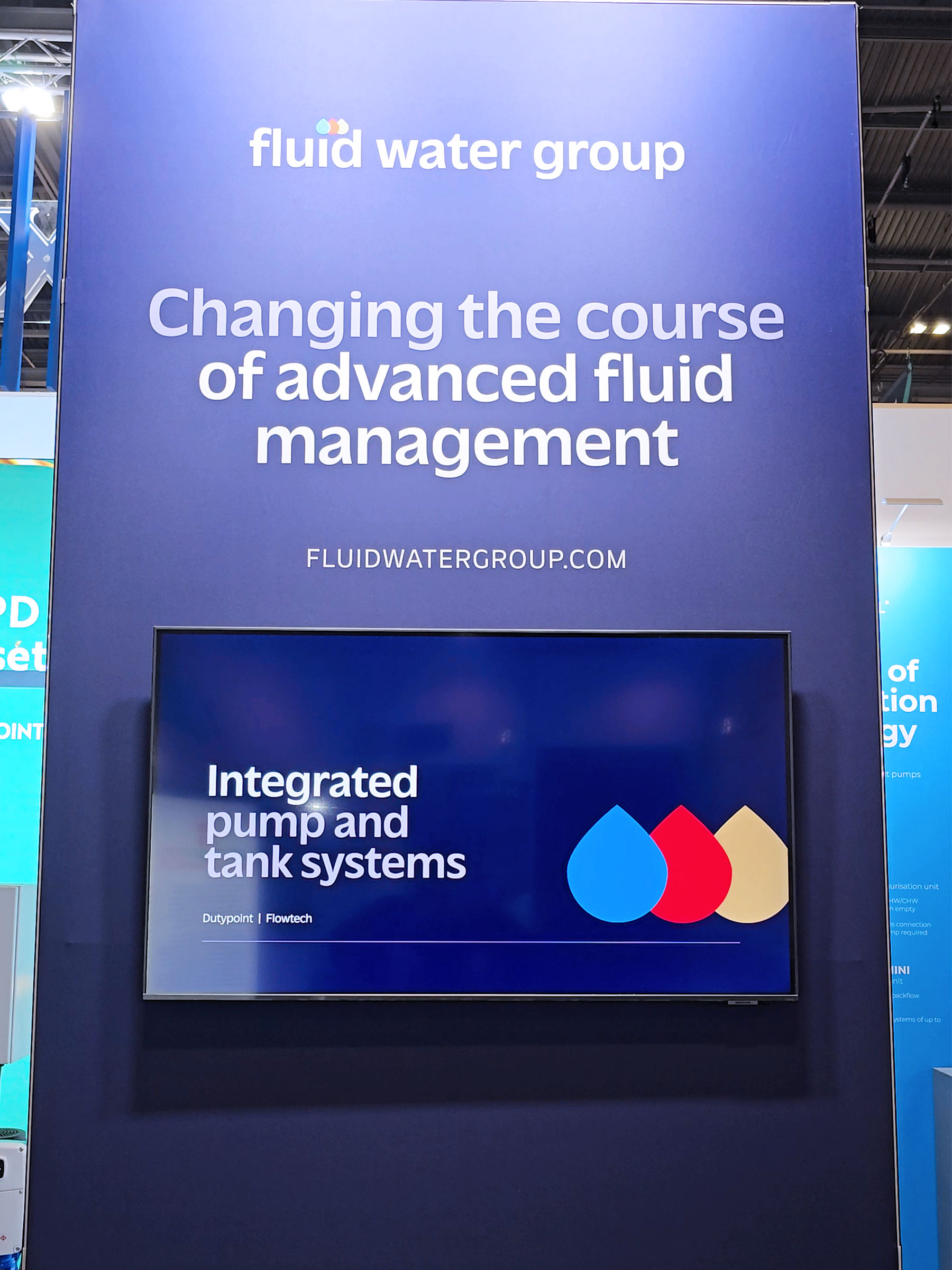

The events and exhibitions industry is moving away from disposable stand construction in favour of reusable exhibition stands that deliver greater commercial, operational and environmental value. Modular Exhibition Stands use reusable framework systems that can be reconfigured, expanded and adapted as your exhibition programme evolves, rather than being manufactured from scratch for every event.
When planned strategically, a modular exhibition stand becomes far more than a temporary exhibition structure. It becomes a long-term business asset that evolves alongside your exhibition programme. The same framework can support different stand sizes, layouts, technologies and visitor experiences while significantly reducing unnecessary remanufacturing and long-term exhibiting costs.
In this guide, we’ll explore the design principles behind modular reusable exhibition stands and show how thoughtful planning allows a single exhibition stand to evolve across multiple events. You’ll also see how one exhibition programme developed over several years through different stand configurations, technology upgrades and brand transitions while retaining its reusable core architecture.
The real advantage of a modular reusable exhibition stand isn’t simply that it can be reused—it’s that it can be reconfigured. The same core structural framework can be adapted to suit different stand sizes, exhibition objectives and visitor experiences, allowing your exhibition presence to evolve without starting from scratch.
This flexibility enables exhibitors to respond to changing requirements, whether that’s expanding into a larger space, introducing new technology, refreshing graphics or creating different engagement zones for different audiences.
In the sections below, we’ll show how this works in practice, using real-world examples to demonstrate the design principles behind a successful multi-show exhibition strategy.
One of the biggest mistakes exhibitors make is designing an exhibition stand for a single show. While a modular system provides the flexibility to reconfigure, the greatest long-term value comes from planning for your wider exhibition programme from the outset.
When we design a reusable exhibition stand, we don’t just ask about your next event—we look at your exhibition strategy over the next 12–24 months. Understanding where you’ll exhibit, the stand spaces you’ll occupy and how your objectives may evolve allows us to create a modular framework that can adapt as your programme grows.
From day one, we consider:
By designing around your long-term exhibition strategy rather than a single event, your modular exhibition stand becomes a flexible asset that can be expanded, reconfigured and refreshed without compromising its architectural identity.
Further Reading: If you’re still weighing up whether modular is the right approach, read our guide: Why More Marketing Teams Are Opting for Modular Exhibition Stands, where we explore the commercial, operational and sustainability benefits driving the shift away from traditional one-off builds.
One of the greatest strengths of a modular exhibition stand is its ability to evolve alongside a business. Whether your exhibition programme grows, your branding changes or your marketing objectives shift, a well-designed modular framework can adapt without the need to start again.
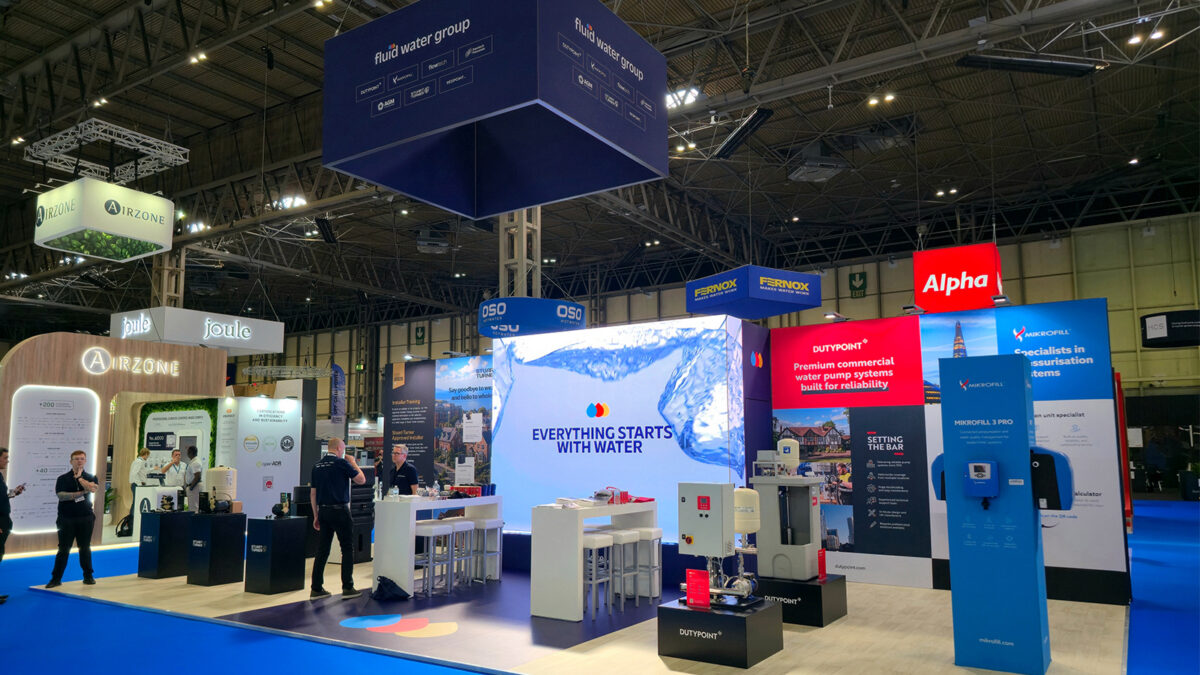
The exhibition stand featured throughout this guide was originally designed for Dutypoint and has continued to evolve following the company’s transition into Fluid Water Group. Across multiple exhibitions, the stand has been reconfigured for different space sizes, refreshed with new branding and enhanced with new visitor engagement features, whilst retaining its reusable modular framework.
The images below illustrate how the same core architecture has been adapted over time, demonstrating how modular exhibition stands can support business growth, brand evolution and changing exhibition objectives without compromising consistency or requiring a complete rebuild.
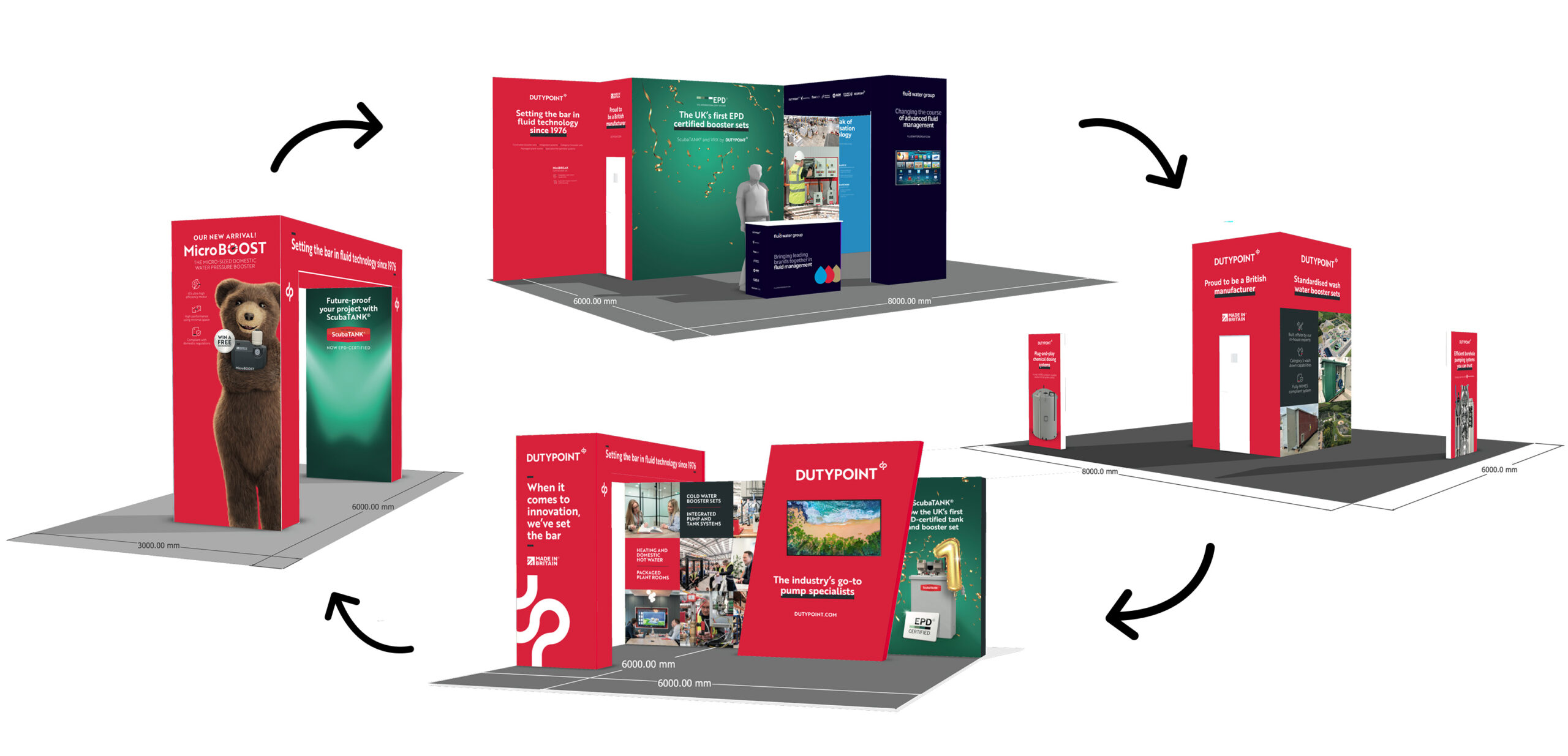
Scalability is designed in from the outset. Rather than creating a stand for a single exhibition, the core structural framework is planned to adapt to different stand sizes, layouts and exhibition objectives. This allows the same modular components to be reconfigured and expanded over time, creating a consistent brand presence across your entire exhibition programme.
The short demonstration shows how a single flightcase of modular components can be assembled into multiple exhibition stand configurations. It illustrates how modular exhibition stands are designed to scale, enabling exhibitors to maximise the value of the same core framework across multiple events.
A well-designed modular exhibition stand isn’t defined by a single layout—it’s defined by how effectively its core structural framework can be reconfigured to suit different exhibition objectives.
Rather than designing a completely different stand for each exhibition, identify the core structural elements that will define your brand, then incorporate them into every stand configuration from the outset.
As demonstrated by the stand concepts above, the same modular framework can be reconfigured to create distinctly different exhibition environments whilst retaining the same underlying structure and key design features.
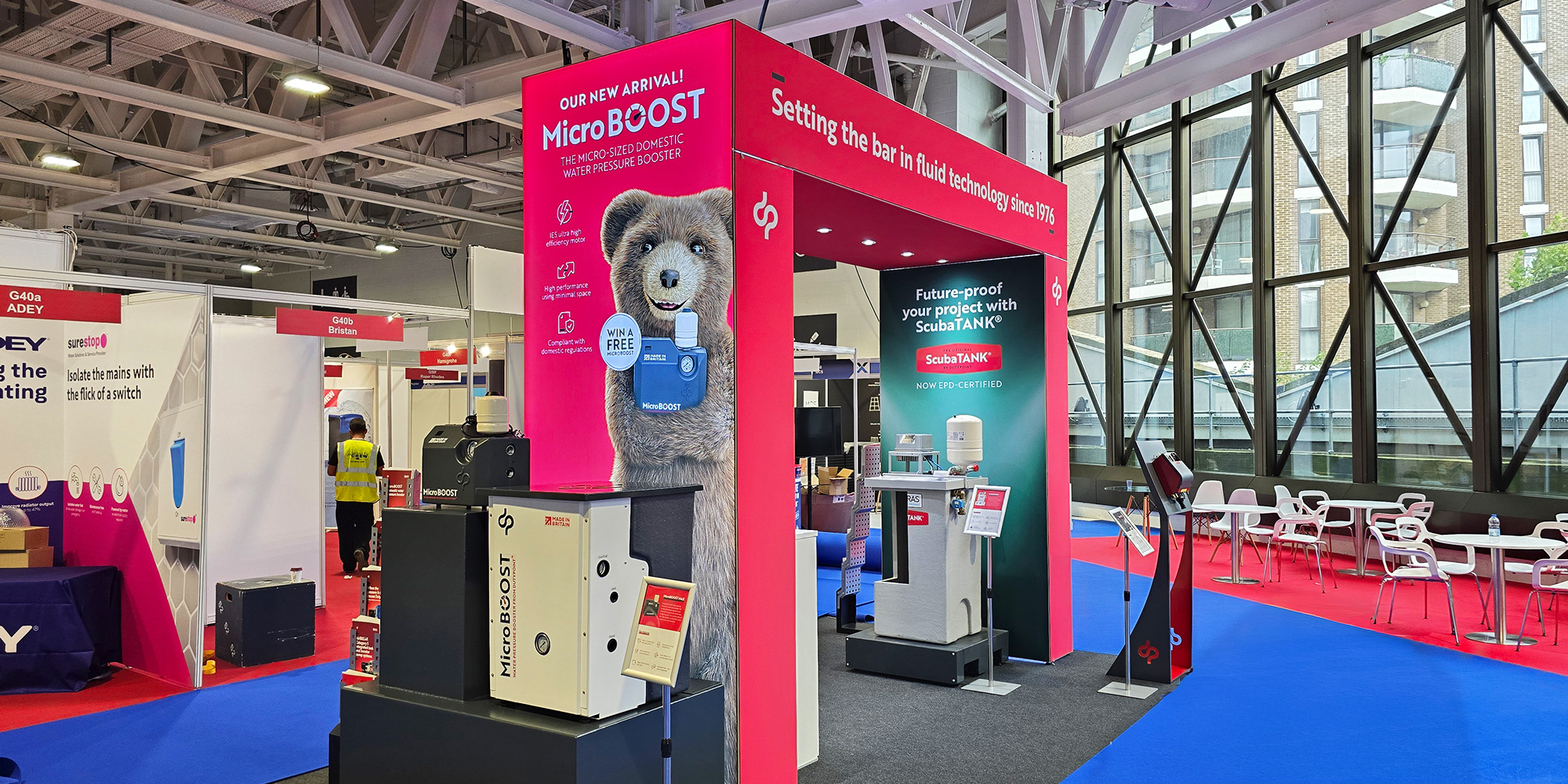
The photograph below shows the 6m × 3m island stand built for PHEX 2024, bringing one of these modular concepts to life. Whilst it appears purpose-built for a single exhibition, it shares the same reusable modular framework and design philosophy that continued to evolve across subsequent events.
That doesn’t mean every exhibitor should keep the same look forever. As businesses evolve, launch new products, acquire new brands or refresh their identity, it’s often the right time to introduce new design features. A modular exhibition stand gives you the flexibility to retain the core structural elements that continue to add value, replace those that no longer align with your objectives, or introduce entirely new focal points—without rebuilding the stand from scratch.
The same principle applies to exhibition technology. As marketing objectives evolve, accessories such as LED video walls, interactive touchscreens, digital product demonstrations and lighting can be incorporated into the existing framework, allowing the stand to deliver a completely different visitor experience whilst preserving the investment in the reusable structure.
By separating the reusable structural framework from the design features that shape the visitor experience, you can continue evolving your exhibition presence whilst protecting the investment hidden beneath the surface.
One of the simplest ways to maximise the lifespan of a modular reusable exhibition stand is to separate core brand graphics from campaign-specific messaging.
Rather than redesigning the entire stand for every exhibition, the structural framework and primary branding remain consistent, whilst selected graphics are updated to suit a new audience, product focus or marketing campaign.
This approach allows the same exhibition stand to remain relevant across multiple events whilst maintaining a consistent brand identity and avoiding unnecessary structural changes.
The evolution from Dutypoint to Fluid Water Group demonstrates this in practice. Whilst the reusable framework and many of the core structural elements were retained, the graphics evolved to communicate the new group identity, introduce multiple brands within the organisation and clearly differentiate Commercial and Residential solutions. By updating the graphics rather than rebuilding the stand, the business achieved a completely new visual identity whilst continuing to maximise the value of its existing exhibition assets.
When developing a modular graphics strategy, it’s important to identify which graphics should remain consistent for the lifetime of the stand and which should be designed for regular replacement. This approach works particularly well for:
Top Tip: Avoid including exhibition names, dates or locations within your core graphics. Keeping these elements generic allows your primary graphic assets to be reused across multiple events, reducing both reprint costs and material waste whilst extending the lifespan of your exhibition stand.
Our backlit and block tension fabric graphics are designed specifically for modular reuse. They are easily replaceable and produced using 100% polyester, making them fully recyclable and a more responsible alternative to traditional PVC-based graphics.
This method keeps visual updates cost-efficient and sustainable, while significantly extending the working life and ROI of a reusable exhibition stand.
A successful modular reusable exhibition stand isn’t just designed to fit different floorplans—it’s designed to support different exhibition objectives.
Every event has unique requirements. One exhibition may focus on lead generation and product demonstrations, whilst another may require private meeting space, hospitality or educational presentations. Rather than designing a completely new stand for each event, consider the functional zones that are required and how they can be added, removed or reconfigured within the existing modular framework.
Typical functional zones include:
The evolution of the Dutypoint and Fluid Water Group exhibition stands demonstrates this approach in practice. As the business expanded, the stand evolved from a simple welcoming environment into a multi-zone exhibition space, incorporating dedicated product display areas, distinct Commercial and Residential zones, meeting facilities and presentation spaces—all whilst retaining the same reusable modular framework.
By designing these functional areas as interchangeable components rather than fixed features, exhibitors can adapt their stand to the objectives of each exhibition without compromising visitor flow or investing in an entirely new stand.
Before finalising your stand design, ask yourself one simple question:
“What do we want visitors to do on our stand?”
The answer should determine the number, size and positioning of your functional zones, ensuring every square metre contributes towards your exhibition objectives.
Reconfiguring a modular reusable exhibition stand doesn’t stop at the structure. When designing for multi-show use, accessories, AV and technology should be treated as interchangeable system elements rather than permanent fixtures. This allows each exhibition to deliver a different visitor experience without investing in an entirely new stand.
From the same modular framework, exhibitors can reposition, replace or upgrade elements such as:
For one exhibition, the focus may be immersive product storytelling through a large-format LED video wall. For another, it may shift towards interactive touchscreen demonstrations, additional product displays or lead-capture technology. Because these elements integrate with the modular framework rather than define it, they can be rescaled, relocated or removed entirely to suit each exhibition.
This approach was demonstrated as the Dutypoint exhibition stand evolved into Fluid Water Group. As the business expanded, a dynamic LED video wall was introduced to reinforce the new group identity, whilst dedicated product display areas were created for the Commercial and Residential divisions. Rather than replacing the stand, new technology and accessories were integrated into the existing modular framework, allowing the visitor experience to evolve alongside the business.
By treating accessories and technology as modular components rather than fixed investments, exhibitors can continually refresh their exhibition presence, respond to changing marketing objectives and maximise the return on their exhibition assets—all whilst maintaining the efficiency, sustainability and cost-effectiveness of a modular reusable exhibition stand.
Designing a modular reusable exhibition stand for long-term use isn’t just a design decision—it’s a commercial one. By planning for reuse from the outset, exhibitors can create a long-term exhibition asset that continues to evolve alongside their business.
Key commercial benefits include:
To explore these benefits in more detail, including the financial, operational and sustainability advantages of modular exhibiting, read our guide: Why More Marketing Teams Are Choosing Modular Exhibition Stands.
Modular reusable exhibition stands fundamentally change how businesses approach multi-show exhibiting. By designing for reconfiguration from the outset, exhibitors create a flexible exhibition system that can evolve alongside their brand, products and marketing objectives.
From scalable layouts and reusable structural elements to interchangeable graphics, adaptable functional zones and upgradeable technology, every component works together to maximise the lifespan and value of the original investment.
Rather than commissioning a new stand for every exhibition, businesses can continually refine and enhance their exhibition presence—delivering fresh visitor experiences whilst reducing costs, minimising waste and maintaining a consistent brand identity.
Whether you’re exhibiting at two events a year or managing an extensive international exhibition programme, designing for long-term reuse transforms your exhibition stand from a one-off project into a strategic marketing asset that continues to deliver value for years to come.
Plan your exhibition stand for multi-show success.
Design once. Reconfigure for every event.
Plan your exhibition stand for multi-show success.
Design once. Reconfigure for every event.
Tell us about your exhibition, stand space and project requirements. Whether you have a detailed brief or are starting with a blank page, our team will review your requirements before preparing an initial 3D stand concept and quotation.
Let’s book a call to discuss your brand goals, upcoming projects, and how our team can help bring your ideas to life.
Let’s book a call to discuss your brand goals, event calendar, and how a Hybrid and/or Immersive stand can elevate your future presence